AUSLÄNDER
HAUS!
A house for everyone.
From Cairo to Vienna: Zeidan, aka DJ ZIDI, on Ausländer Haus!, reclaiming a word and the warmth of a shared dancefloor.
ZEIDAN · DJ ZIDI · SOUTHGEMACHTTwo people stop in front of a poster. They think they have read a slogan telling foreigners to leave. Zeidan points to the H. Then comes the laugh, a conversation — and, as he tells it, two more dancers. The distance between exclusion and an invitation is a single letter. Ausländer Haus! builds a whole night around what happens next.
VIENNA
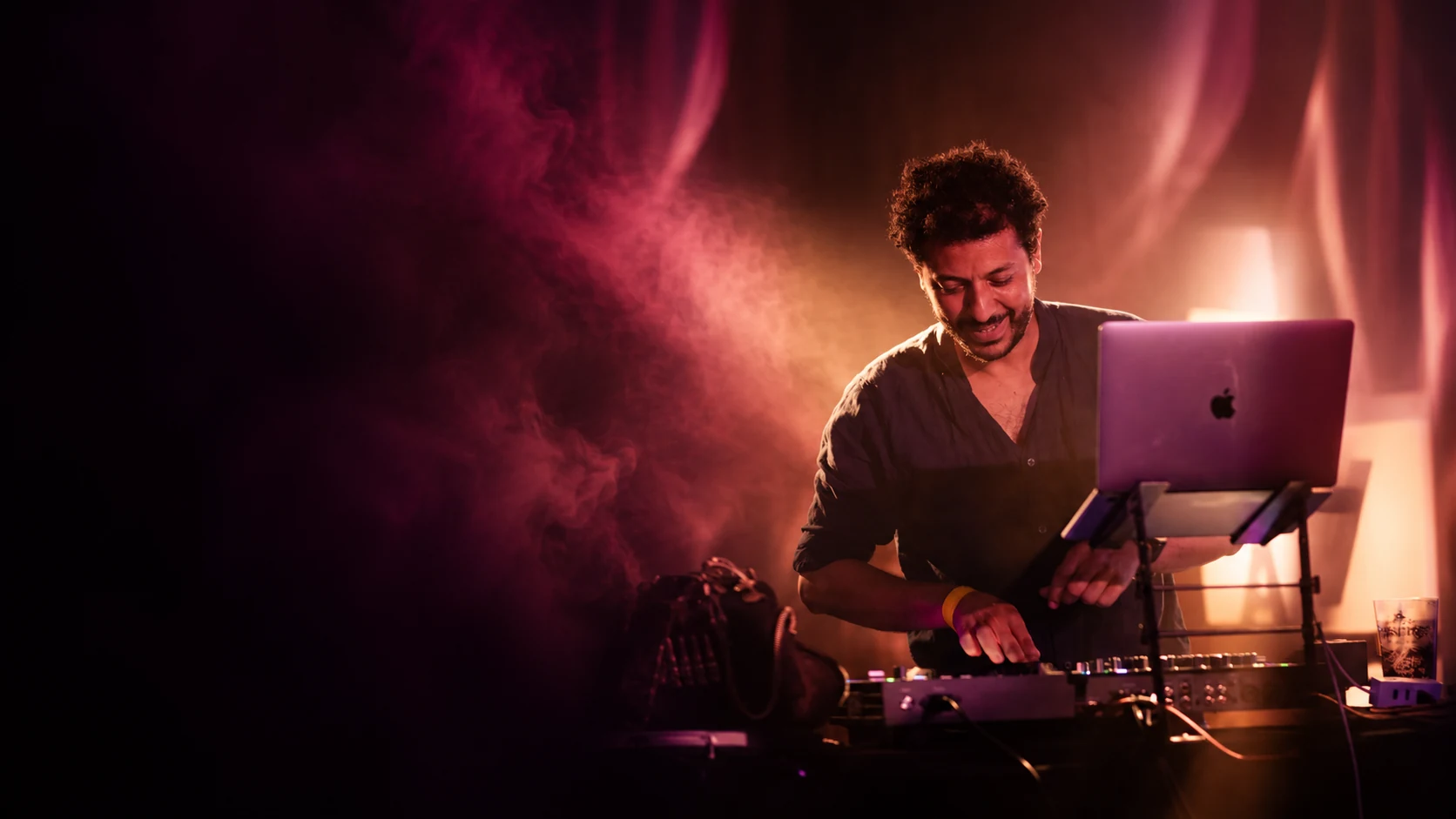
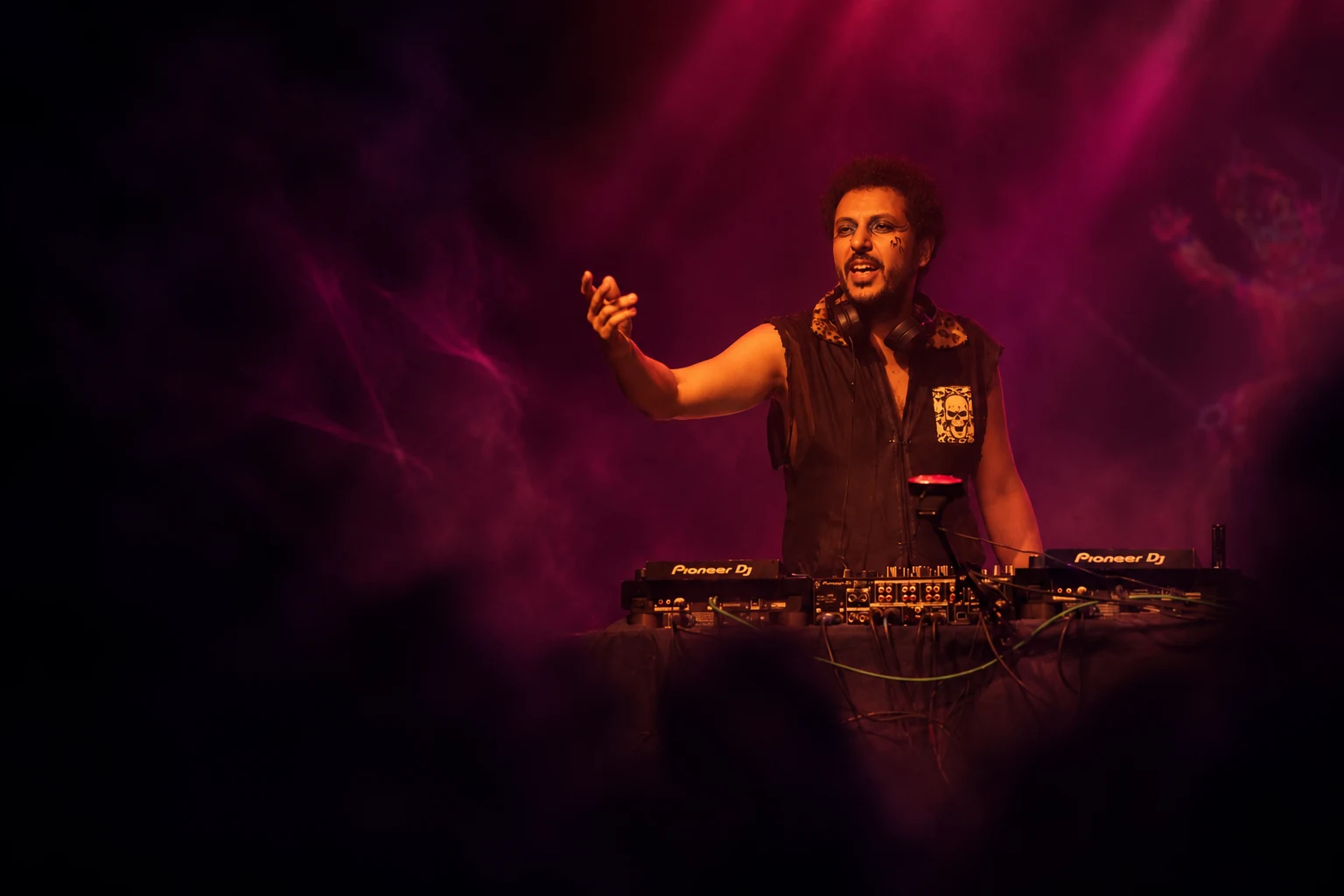
Before he began building nights in Vienna, Ahmed Zeidan had already built a place for music in Cairo. In 2014 he founded Room Art Space, bringing live music, performance and cultural exchange into an independent setting. After moving to Vienna, he founded Southgemacht, the association behind Ausländer Haus!. As DJ ZIDI, he brings that work onto the dancefloor: house and hip-hop meet Arabic, Kurdish, North African and other musical worlds. His new biography also looks ahead to a guest-curator role at Salam Festival 2027.
A room large enough. A welcome close enough.
The scale of a club, the closeness of a house party: this is the combination Zeidan had been searching for. Ausländer Haus! grew from a missing feeling rather than a missing genre. The dancefloor becomes the place where a curatorial idea is tested by the people who enter it.
What were you missing in Vienna's nightlife when you started Southgemacht? Was there a moment at one of your early nights when you thought: this is why we're doing it?
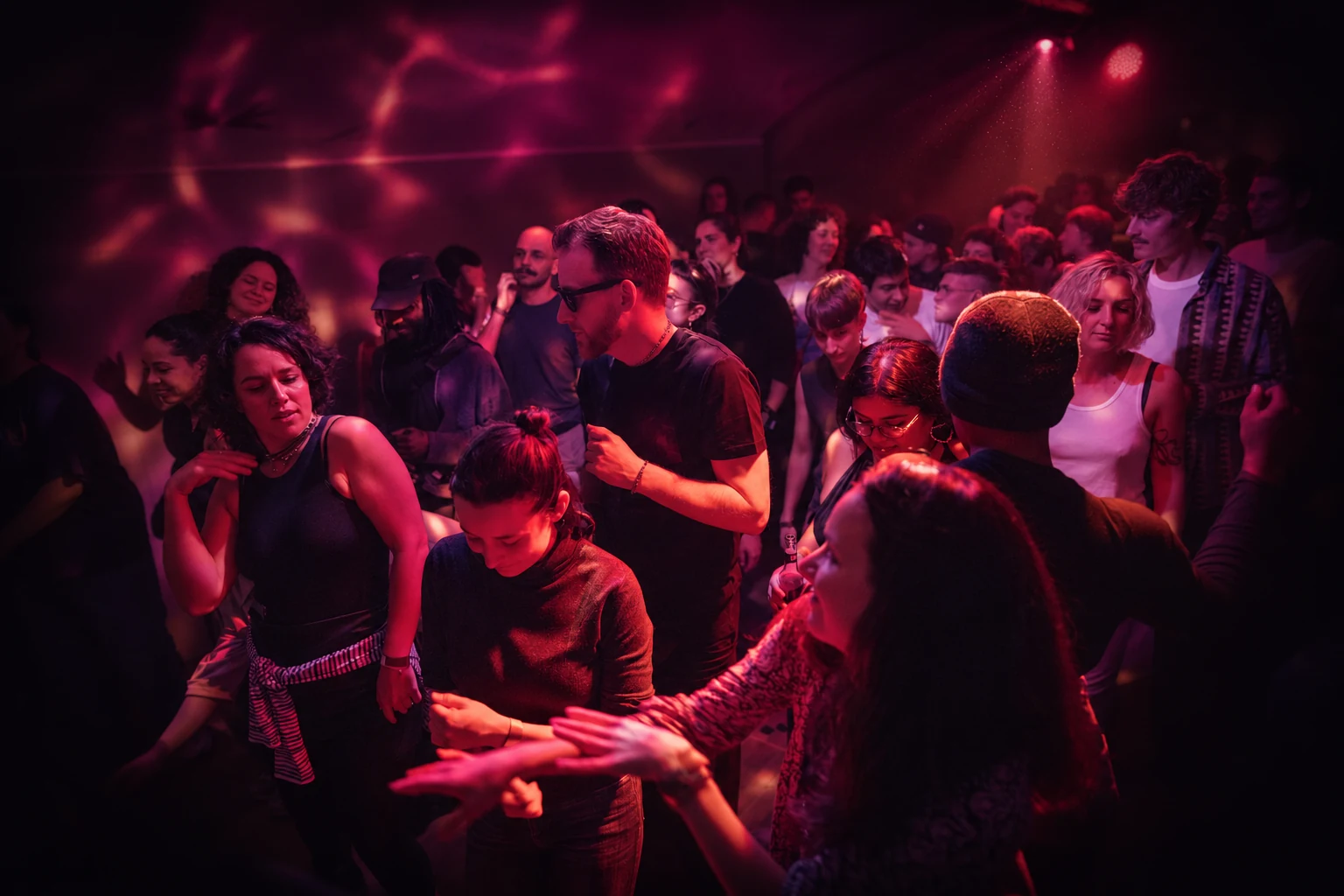
When I moved to Vienna in 2020, I was eager to explore its nightlife. I went from club to club, party to party, with a hunger I couldn’t quite satisfy. Eventually, I realised I was looking for a party big enough to bring together people from different backgrounds, but with the warmth of a house party. Friendly faces, music that makes your hips move, smiles on the dancefloor, and a feeling of connection, unity and above all purpose.
That was something I struggled to find, so I decided to create a space that reflected that vision. I didn’t know what to expect at the beginning, but the response soon blew me away. I realised I wasn’t alone in that hunger. Seeing how strongly people connected with what we were doing made me feel that we had found something special.
Now, every time I look out over the dancefloor at Ausländer Haus, I see people from so many different backgrounds dancing together, with big smiles on their faces and such freedom in the way they move. That feeling of joy and solidarity, rooted in shared moral and political values, makes me think: yes, this is exactly why we started.
The letter that changes the room.
The name carries the politics out onto the street before anyone reaches the decks. For Zeidan, reclaiming “Ausländer” means refusing to let somebody else define the role he plays in a city he belongs to. The joke on the poster has a serious destination: a room whose hosts set their own terms.
“Ausländer Haus!” is a name that stays with you. How did you come up with it, and is there a reaction to the name that you still remember?
As an immigrant arriving amid a wave of anti-immigration rhetoric, I quickly learned how much weight the word “Ausländer” carries. I struggled with how I felt about it. In Cairo, Europeans living there were called “expats”. Then I moved to Vienna with the naive belief that I would be seen as an equal, and suddenly I was an “Ausländer”. Over time, I began to reclaim the word and wear it with pride. Changing that narrative became part of the role I wanted to play in the society I now belong to.
Our parties aren’t about having to prove that we fit in, or being seen only as victims of racism. They are spaces where we set the terms and offer a gift to this society. We are the kings and queens of the night, and everyone is welcome to join us.
Before we became better known, there were a few occasions when I was putting up posters and noticed people reacting with fear or shock. They had read “Ausländer raus” instead of “Ausländer Haus”. I would smile and wait for them to notice the H. Usually, it ended with a laugh of relief and an interesting conversation. Once, two friends stood discussing the poster in shock while I kept pointing at the H. It took them a surprisingly long time to see it. That moment really stayed with me but again ended with a big laugh, a heart opening political discussion and two extra awesome dancers on our dance floors.
A sound from home. A room that listens.
Recognition can happen in the middle of a set. An Afghan pop track does not need to be announced as a lesson in diversity; it can make one listener feel seen while everybody around him keeps dancing. Zeidan’s answer gives that idea a specific face and a specific song.
Your nights bring different musical backgrounds onto the same dancefloor. Can you remember a track or transition that got a reaction you weren't expecting? What happened?
I’m always watching the crowd when I play a track from a region that doesn’t often get heard in the local club scene. It’s deeply fulfilling to see someone at the back suddenly shout with joy because they recognise a familiar song being played in a Vienna club.
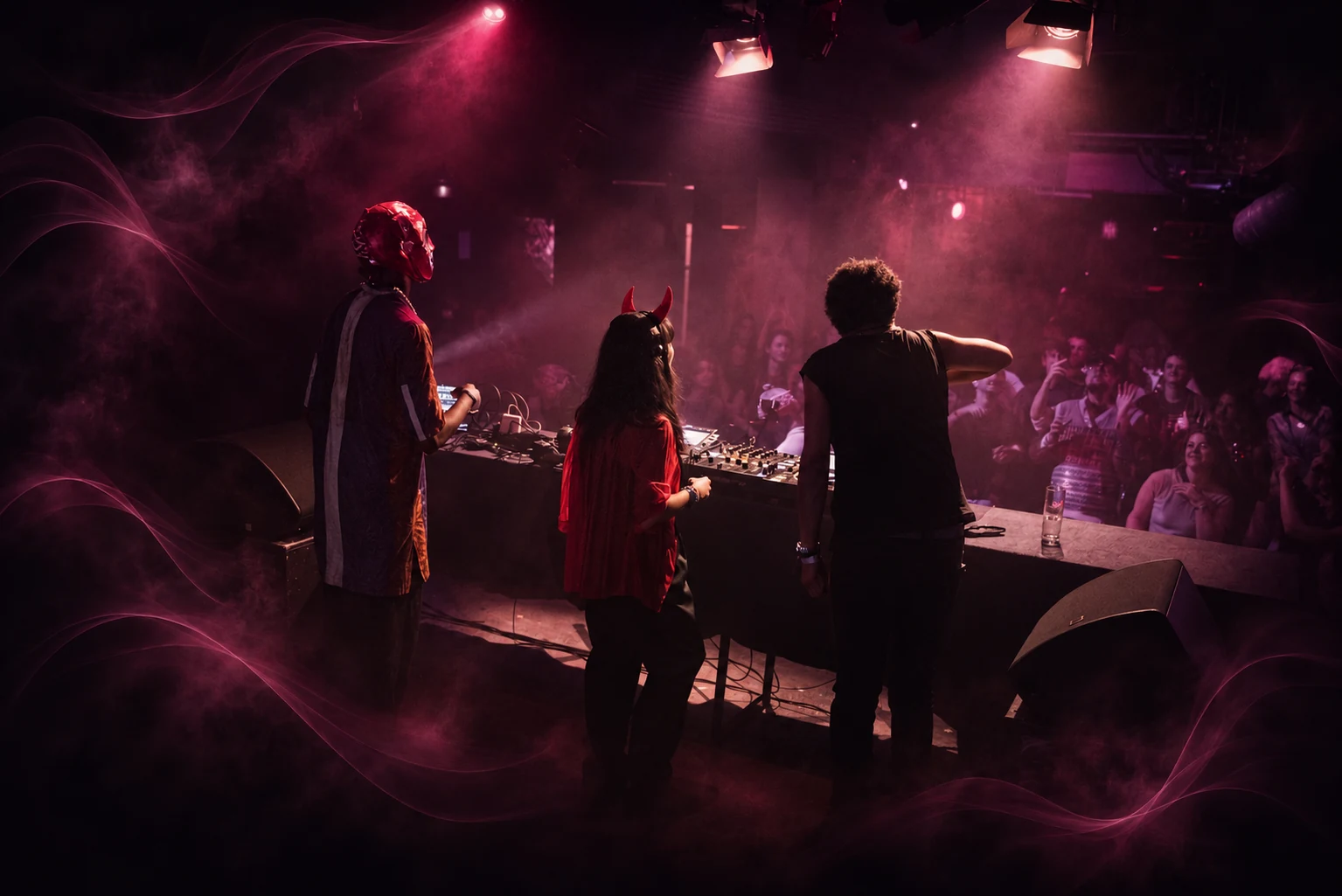
Once I played Gonjeshkake by Vale, a great pop hit from Afghanistan, after my set a young man with Afghani roots came up to me and said it was the first time in his life that he had heard an Afghan dance track in a club in Europe. He told me he had never imagined seeing so many people around him -in this new place he calls home- jumping and dancing to that music. It made him emotional. Those are some of the moments we look for and value so much. Someone hearing a sound from home and seeing a whole room connect with it.
Before the first beat.
The workshops extend the night beyond selection and mixing. People learn something unfamiliar together before the party begins. That shared uncertainty becomes a way into the room — curiosity replacing the pressure to already know how to belong.
You've also included dance workshops in your events. What changes between people when they learn or try something together before the party starts?
The workshops create a sense of connection before the party even starts. By the time the music gets going, the energy is already there, and a group of strangers has begun to feel like friends.
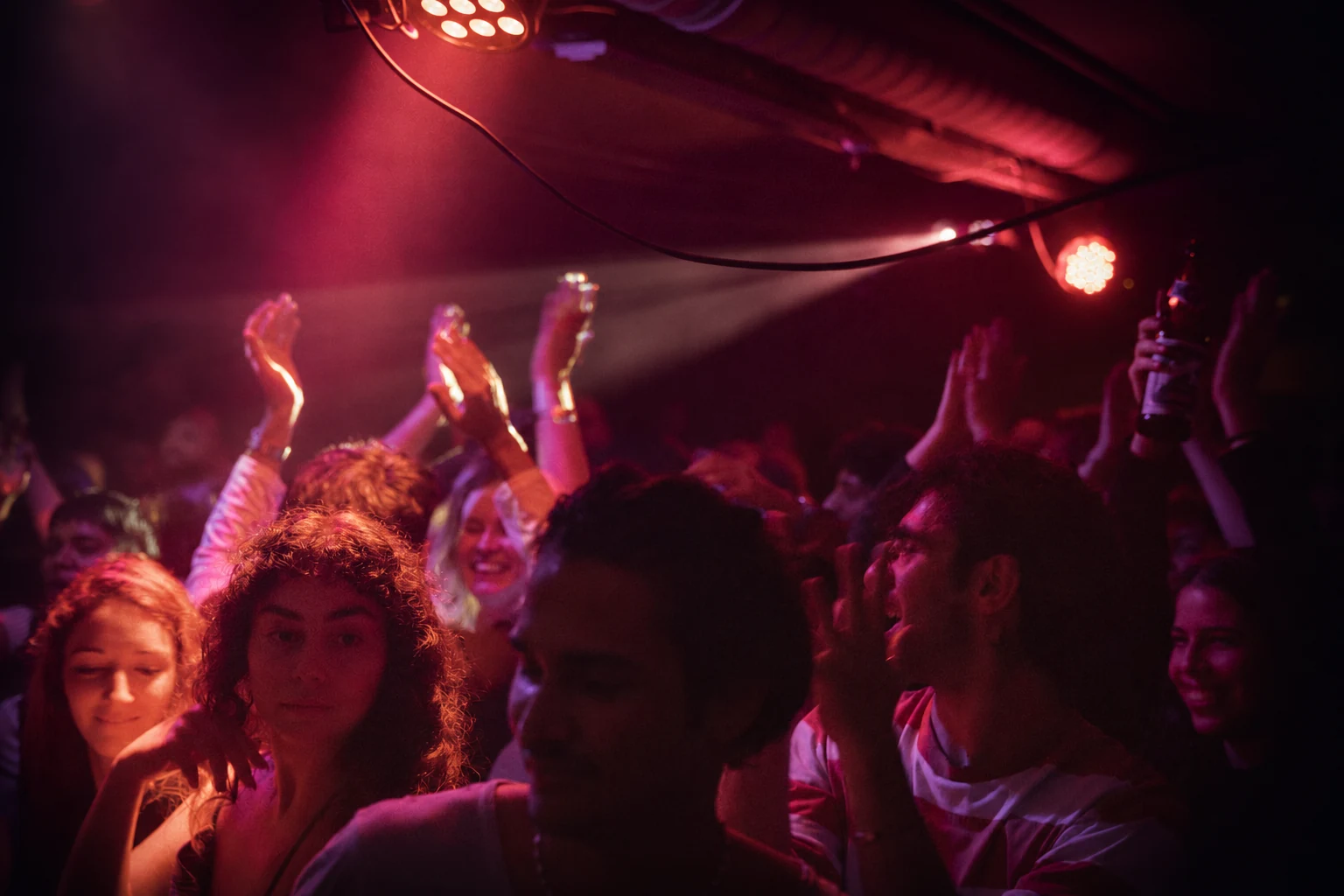
Trying dance moves from around the world can help us step outside the expectations of a predominantly white nightlife scene and let go of the pressure to look or act a certain way to be accepted. Learning something unfamiliar together gives people a chance to be curious, and connect.
As immigrants, we are constantly trying new things simply by living in a new place. We understand the joy of that as well as the challenges. The workshops invite everyone to share a little of that experience.
Take the warmth with you.
On 25 October 2026, Ausländer Haus! comes to PMK for the closing night of Positive Futures in Innsbruck. Zeidan’s plan begins with listening to the people already making spaces there. What travels from Vienna is an attitude: leave room for surprise, and make the welcome tangible.
For the night with Positive Futures, you're bringing Southgemacht to Innsbruck. What do you want to find out about a new place before playing there, and what do you want to bring with you from your Vienna nights?
We’re really excited about this! Innsbruck is a city we’ve wanted to bring our story to for a long time. Positive Futures feels like a wonderful opportunity to connect with the local community and work alongside such a creative and inspiring team.
Before playing somewhere new, we want to understand the local scene. who is creating spaces, what people are dancing to, and which sounds and communities have fewer opportunities to be heard. I want us to arrive with curiosity and learn from the people already making things happen there while bringing our own experiences.
From Vienna, Cairo, Chile and Uganda we want to bring the warmth, openness and musical surprises of our nights. We want people to hear something familiar, discover something unexpected and feel comfortable sharing the dancefloor. Above all, we want to bring that house party feeling. a room full of people from different backgrounds who feel safe and that they belong to a bigger picture and a common struggle.