ID: Interview Vienna / Independent since 2003
NOISE
APPEALRECORDS
The work behind the record.
500 CDs, a call about Fuckhead, and 300 sleeves that need doing all over again. Dominik Uhl on life behind Noise Appeal Records.
In conversation with Dominik Uhl ↓A record arrives from the pressing plant. For listeners, its story is just beginning; for the label, much of the work is already done. At Noise Appeal Records, though, this can also be the moment to start again. Since 2003, the Vienna independent label has released music that belongs on a turntable as much as on a stage. Dominik Uhl takes us through the decisions, encounters and occasional repairs behind it.
Now what?
This story starts with boxes: 500 copies of Fresnel’s CD Scenario. A finished record answers the question of how the music should sound. What happens to it next is another job entirely. Uhl remembers that first moment as vividly as his later encounters with people whose music had shaped his own life.
When you think back to Noise Appeal’s early years, what has stayed with you?
There are probably too many moments to count. But of course: when the first release arrived from the pressing plant — Fresnel, Scenario, on CD. That was really special. And then the question: now what? What do we do with these 500 CDs? The band came over that evening for a get-together.
Or when a friend who was working with the label for a while called to say that Didi Bruckmayr and Fuckhead wanted to make a record with us. That felt like a real seal of approval for the label.
And perhaps one more, because good things come in threes: my first meeting with Hans Platzgumer, to convince him of my idea for an HP Zinker 7-inch box. You have to understand: they’ve been something like my all-time favourite indie band since I was young. And there I was, sitting with him in a Vienna café, having a beer or two. But as I said, over the past 23 years there have been many moments I will always remember.
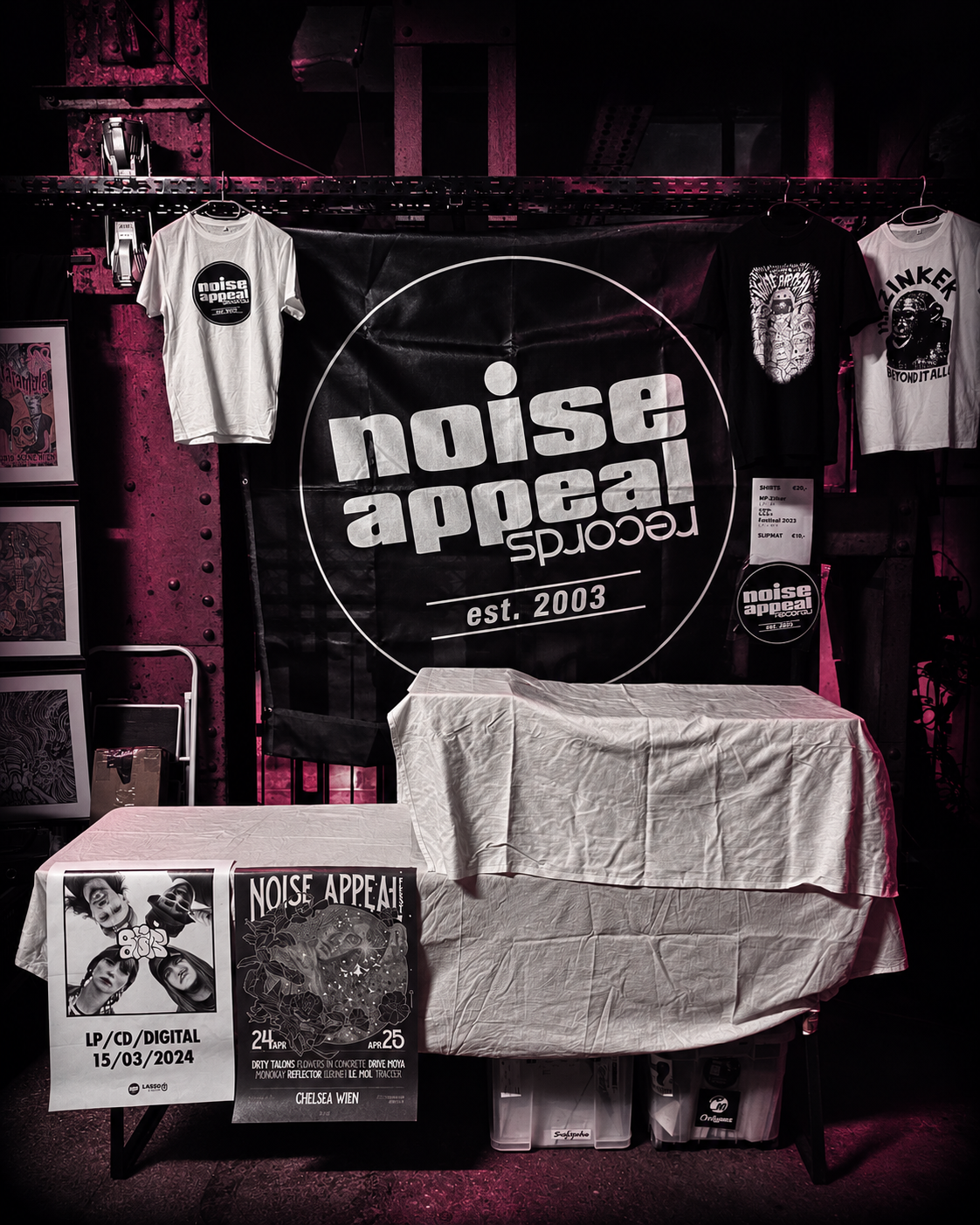
“The music has to blow you away and fit the label.”
Dominik Uhl
The chemistry has to work.
Individual releases become a catalogue; acquaintances lead to new projects. Today, Uhl runs Noise Appeal with Michael Marlovics. The label’s stylistic openness does not mean every band is a fit. Before anyone commits time, money and energy, they need to know they can work together.
How did you discover one of your more recent bands? What convinced you to work with them?
We make those decisions together — Michael and I, who run the label. And honestly, over the past four or five years, most new bands have come to us through our network. A musician plays in one band, has a side project, or is a good friend of someone. That sort of thing.
Then, of course, we listen to the music and ideally meet up, because being able to get along is extremely important. If it doesn’t work on a personal level, there’s no point starting a project. Once those things feel right, we can think about it more seriously. It is a commitment, after all. On both sides. Both parties put in work, time and money. A lot needs to be right before you take that on.
But of course, the music has to blow you away and fit the label. Despite our openness, that isn’t always the case. And the chemistry between the people involved has to work.
Between releases
A label is people working together.
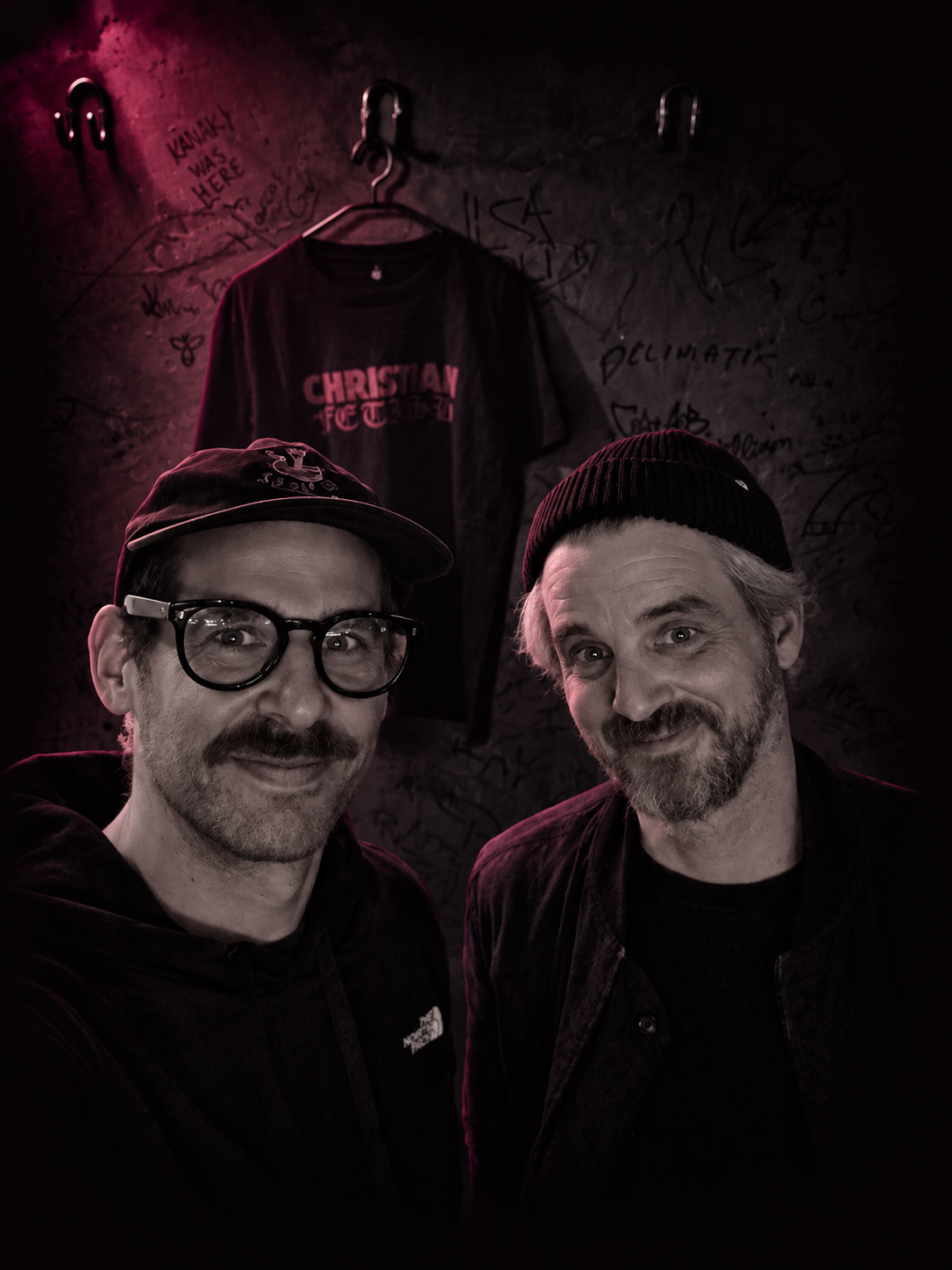
Behind the thumbnail.
Press play, and a release may appear to be little more than a square image. Behind it are decisions about songs and singles, a schedule, print files and conversations with a pressing plant. Uhl describes work that starts long before the finished product — while leaving the final artistic choice with the band.
What does your work for the bands involve that listeners never see?
Pretty much everything, right from the start. As a listener, especially on digital platforms, you may only hear the music and see a tiny thumbnail of the cover.
I can only speak for Noise Appeal Records, but it ranges from selecting songs — the artist always has the final say — to singles, the release schedule, promotion, help with print materials, communicating with pressing plants and distribution, and so on. Everything it takes to get a product into the shops, even if the ‘shop’ is only a streaming platform.
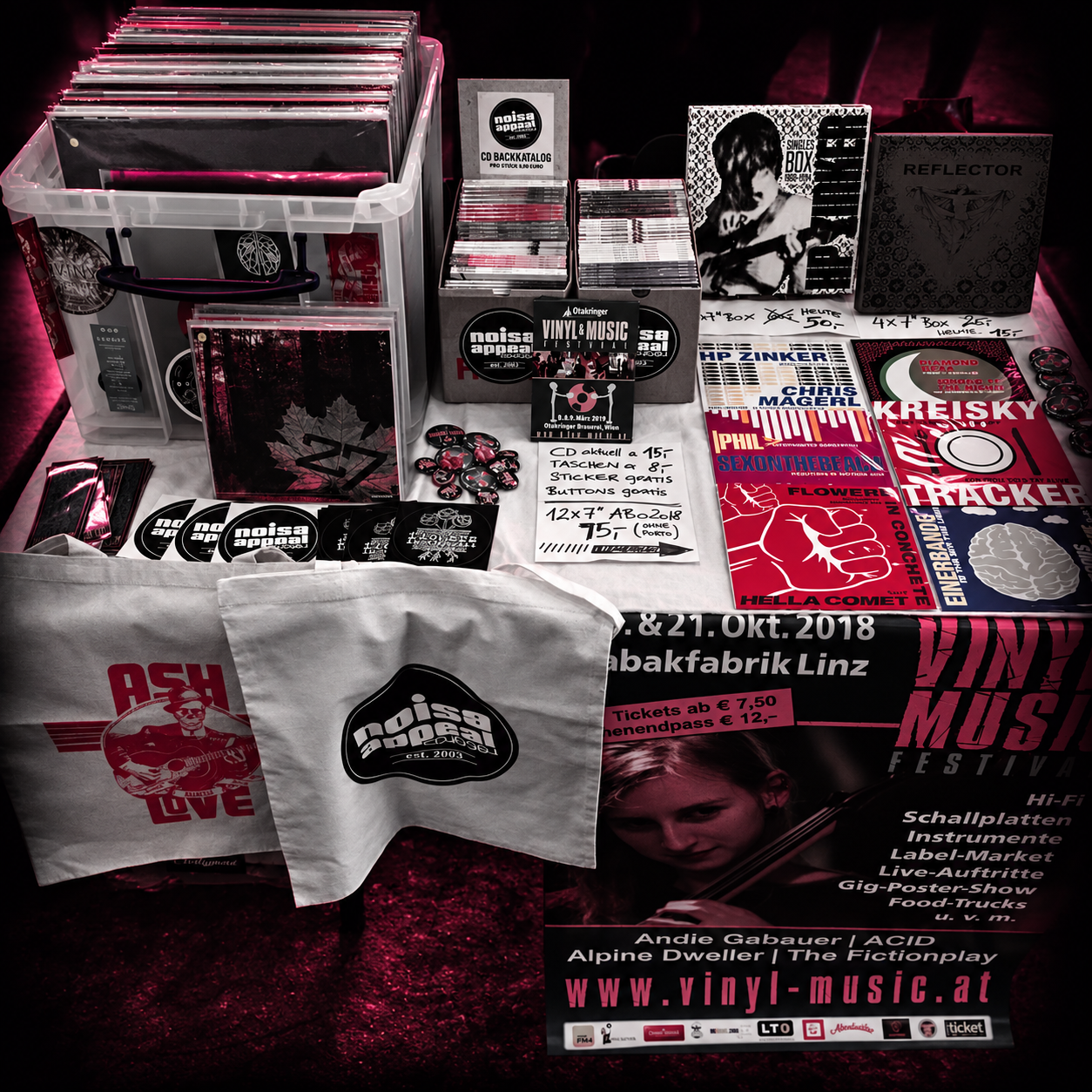
fold. glue. do it again.
Again. All 300.
Released in 2013, the HP Zinker Singles Box brought together recordings from 1989 to 1994. For Uhl, it also meant working with a personal favourite. Another HP Zinker record illustrates the practical problems a physical release can bring: a transparent wrap was meant to transform the cover of Mountains of Madness. The first version did not work as intended. The whole edition had to be reworked by hand.
HP Zinker · 2013 / Der StandardYou also reissue older recordings. Was there a record that took much more work than expected? What happened?
No. Not more work than expected, anyway. You generally know beforehand what is coming, or what might happen. But the HP Zinker Singles Box I mentioned was a huge amount of work, because we made so much of it ourselves. The same goes for the singles club we did for our 15th anniversary: a new split 7-inch every month, with a screen-printed sleeve.
Where we did end up with more work and expense was the HP Zinker Mountains of Madness double LP. It has a plastic wrap around it that creates an effect as you slide the record sleeve out. Broadly speaking, you get two covers: one with the wrap and image A, and one without it and image B.
When it arrived from the pressing plant, you could barely see the effect. The material was too thick and not transparent enough. So we decided to unpack every copy, dispose of the wraps through the appropriate recycling and make new ones. We then had clear, transparent wraps made and took them to a printer to be coated in red ink.
Testing it there until it worked, then folding 300 of them, gluing them and putting one around each record — that was quite a job.
Easier to hear. Harder to play.
Tutorials, home recording, direct access to streaming platforms: musicians have different tools for releasing music now than they did in 2003. Uhl separates those possibilities from the question of how a band actually reaches an audience and plays shows. His assessment holds opportunity and frustration together, rather than simply looking back with nostalgia.
What is easier for a young band in Austria today than when you started — and what is harder?
Very little is easier. Maybe learning an instrument and making professional recordings, because you can do so much yourself? When I first stumbled into music, you still had to learn guitar from a chord book, by ear, and by listening to records. Now there are plenty of online tutorials that take some of that work off your hands. That isn’t a bad thing in itself.
The same applies to recording and, of course, the first step in distributing your art: getting music onto streaming platforms and so on. All in all, that doesn’t take much.
Everything else, I think, has become massively harder. The DIY networks for playing shows — which are absolutely crucial — barely exist anymore. Every step needs an agency in the middle before the person on the other side, a club booker for example, will even talk to you. Clicks and streaming numbers matter more than the music itself. If you reduce it purely to business, nothing is easy anymore, and a lot of it honestly makes you want to puke.
On the other hand, it has probably never been easier to put your own art in front of a potentially large audience. There are always pros and cons.
NOISE APPEAL RECORDS