


techNOage.
The guests are the headliners.
Tatjana of techNOage on trust, vinyl and a dancefloor where different generations feel personally invited.
In conversation with Tatjana · SNDR_XONE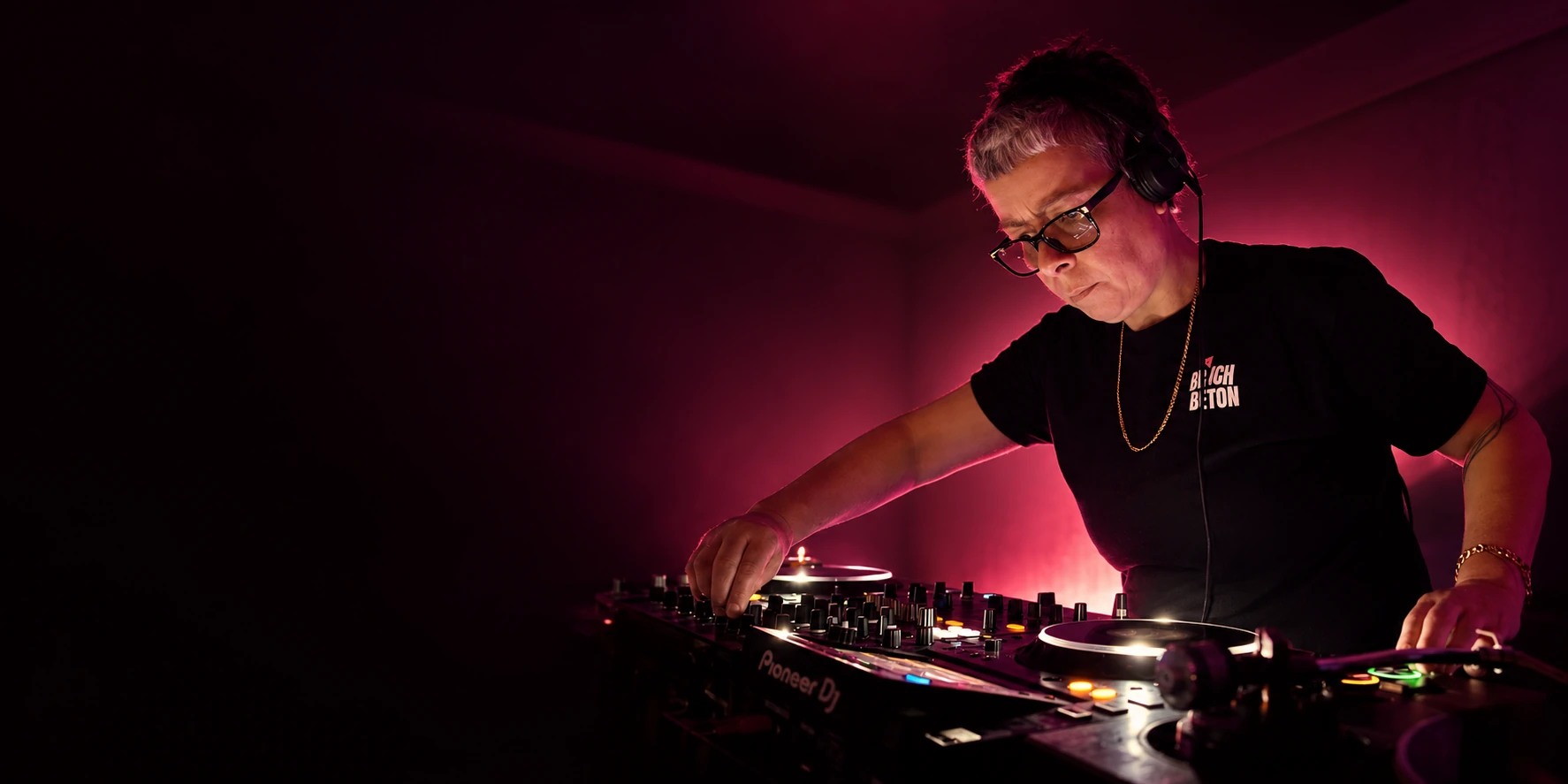
A visit to a club starts long before the first track: with an invitation that really means you, a time that fits your day, a friendly welcome and somewhere to sit down. At techNOage, Tatjana starts with the guest. She explains how that becomes a shared afternoon with adventurous club music.
The Vienna format brings techno together with encounters across generations. This conversation explores practical access, first steps behind the mixer and the musical attention behind a set. Coffee, cake and voluntary donations belong to the story as much as vinyl and a carefully judged change of pace.
An invitation that means you.

You’ve said that techNOage requires a different approach from usual club operations. What did you have to change first so people who wouldn’t normally visit a club felt welcome?
The most important thing, I think, was to name our intended audience directly in the promotion. We explicitly invite older people, people with visible and invisible disabilities, parents, and ravers from then and now. These groups want to be seen and invited. In general, I believe inclusion only works when we adapt systems to the vulnerable and marginalised members of society.
That means scheduling events at times when everyone really can attend. It means a warm welcome, visibility and friendliness. Particularly for people who have never been to a club, or who are chronically ill, you need to build trust so they can feel comfortable and relax.
It also means more accessible entrances and toilets, which many clubs don’t have; places to sit; and balanced lighting and sound, neither too dark nor too loud. Clear respect for privacy and for one another matters too. I want my guests to feel safe, and I don’t want people photographed without their consent.
When an encounter changes something.
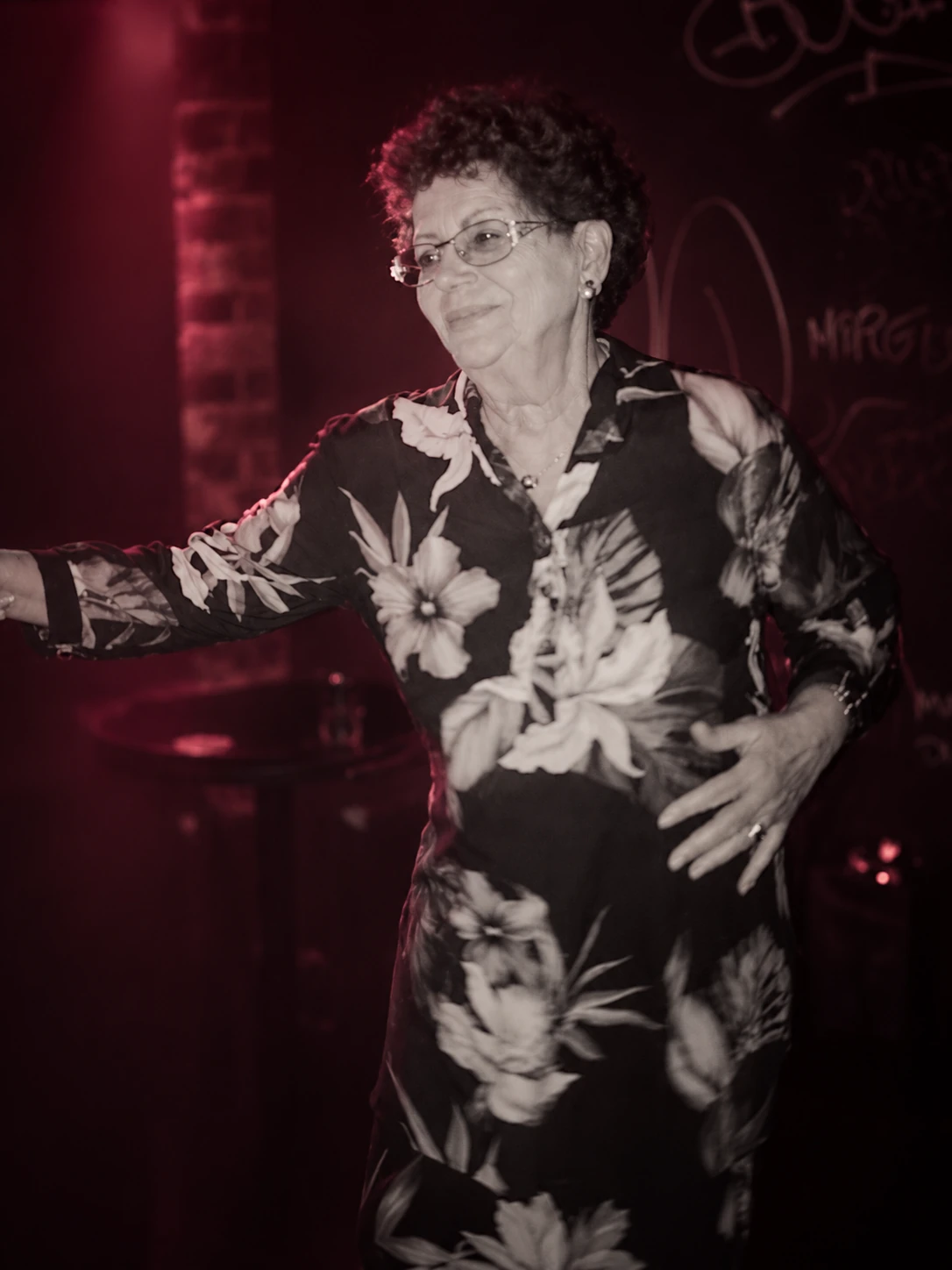
Can you remember a dancefloor encounter that showed you why bringing generations together is worthwhile?
These moments happen at almost every event. Florian uses a wheelchair and has very limited movement. He regularly comes with his support worker, rocks back and forth in his chair, shouts with joy and loves being enveloped by the fog machine. That means an enormous amount to me.
Then there’s Rita, who is 87 and first came with her daughter. She drinks coffee, dances and says that, although she is having a very difficult time after losing her beloved husband, she has experienced so much joy with us. Young and old made a perfect mix of people.
Other regulars live with invisible illnesses and save all their strength for this event to feel alive again. It’s incredibly fulfilling for me.
For vulnerable and marginalised groups, it’s the host, trust and good music that matter.
From dancefloor to mixer.

What would you like older people to take from trying DJing themselves and moving from the dancefloor to the mixer?
I want to awaken their curiosity about making music themselves, or discovering music anew. It doesn’t have to be for a club. It can be at home, at their own raves, birthday celebrations, garden parties or in senior residences: playing their favourite music and dancing.
Today’s technology makes that possible, and the Beat Sync button makes a great deal of sense here. We can encourage connection, strengthen confidence and help people feel less alone as they get older. For years I’ve wanted to offer DJ workshops in senior residences, women’s shelters, and children’s and youth centres. What I’m still missing is the funding and people to help make it happen.
Five decades in a record bag.
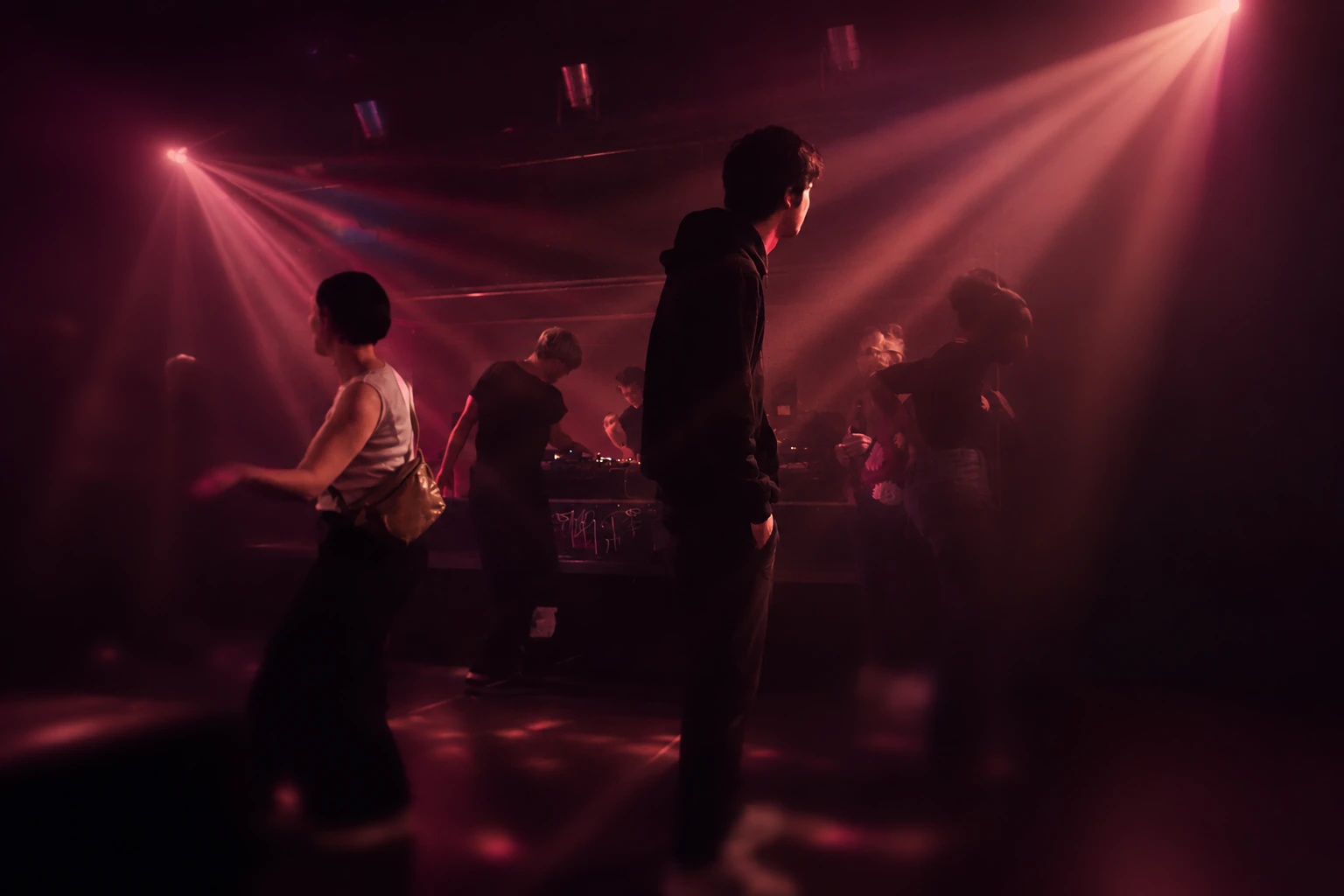
How do you approach the music on an afternoon that brings experienced ravers together with people discovering techno for the first time?
That’s a very important question. At the beginning it shouldn’t be overwhelming, too fast or too experimental. It should be more harmonious: something challenging, new, old and familiar. At the same time, it has to be substantial club music that surprises and generates drive. You have to watch your guests closely and respond to them.
I try to convey five decades of techno culture: from lighter nu-disco, soulful, groovy and bouncy sounds associated with Detroit and Chicago to well-produced peak-time drops or deep industrial-tribe tracks. Then something old-school or minimal can appear again. It all exists in the context of techno’s constant beat, and can be disco-like or house-like too. It’s all one family, with everything inspiring everything else. I also get to play my whole record collection.
To be honest, from my purely personal perspective, I find Vienna’s techno club culture rather boring, both musically and organisationally. There are different views within our collective, and all of them deserve respect. Nevertheless, it is important to me to express my own.
I don’t like it when clubs only play raw, hard or fast music, or when a techno party is only considered good if you have sex in the club or wear latex. An evening begins and everything is already at full speed, running through the same loop all the time. We had tekkno, Schranz and so on back then too. But people played vinyl: every record sounds different and brings movement and life into the music. Breaks were placed with vinyl house samples, in an analogue, focused way. With digital media, it all sounds the same to me. The only tension comes from constant drops that sound as though they were made on a production line. And back then, everyone wore the clothes they felt comfortable in.
For me, there is too little room for creative departures and playing with the music. Often the focus is on the DJs’ performance: looking sexy, hopping and jumping behind the decks to motivate the crowd. You can do that occasionally. But that isn’t how I can be creative, concentrate on doing a great job, push beyond myself, be brave and dare to risk mistakes in a set, together with the people on the floor. Of course, that isn’t what everyone wants either. Perhaps I am also rather spoilt in that respect, shaped by my time in Berlin and my youth in the nineties.
So it’s a lot of vinyl and feeling. It should remain exciting and offer plenty even to those who can only stay for two hours. Most importantly, don’t play too fast, except perhaps for the closing, in the final hour. Music produced at 135 BPM can sound fantastic and wild at 128 without overwhelming people. We generally prefer 120–133 BPM in a single-room disco. We also choose a wide range of DJs to keep things exciting and adventurous.
Start earlier. Think further.

What could other clubs learn from your experience to help more people feel able to visit, even without running an afternoon format?
Start earlier, as I mentioned. Be considerate of other people and put the guests first, rather than the DJs. For vulnerable and marginalised groups, headliners aren’t the important thing: it’s the host, trust and good music. Admission mustn’t be too expensive.
We work entirely on voluntary donations. Guests can decide what their budget allows, try it out if they’re unsure and perhaps put something in the box on their way home.
You also have to promote it directly to the people you mean to reach. Few have Instagram; perhaps they use Facebook, and some don’t even have an email address. So you need posters, flyers, cards, an email newsletter, personal invitations in the street and, above all, wording that makes it clear they really are included.
I want to add that, if club nights started at six in the evening, the audience would be much more diverse and awareness would arise naturally. People with anxiety, for example, who don’t feel able to leave home at night, would be more likely to come. People needing support are also more likely to attend with their companion in the early evening.
When older people are present, younger people automatically become more considerate. We would not have to discuss closing times in the same way either: starting earlier means you can celebrate for longer. The more vulnerable guests will go home earlier anyway, and the young ones can then let loose if that’s what they want.
techNOage
Interview by email · Editorial and image art direction: SCENE:ID. Source photographs: techNOage / supplied photographs.